
 https://www.carlsonbuilding.com/wp-content/uploads/2026/03/Eco‑Friendly-Big-Box-Retail-Cleaning.jpg
1250
2000
Abstrakt Marketing
https://www.carlsonbuilding.com/wp-content/uploads/2026/09/carlson-sizemore-logo-final-CROP-1030x376.png
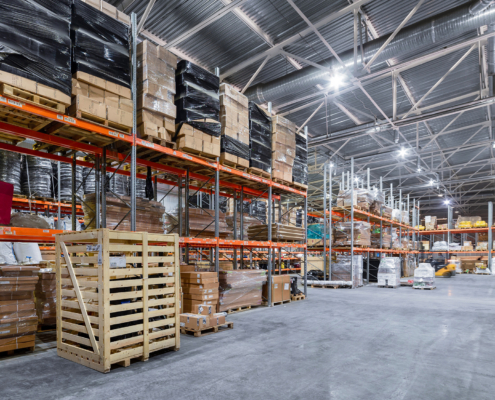
Abstrakt Marketing2026-03-09 10:24:042026-05-07 08:59:50Sustainable Practices to Support Eco-Friendly Big Box Retail Cleaning
https://www.carlsonbuilding.com/wp-content/uploads/2026/03/Eco‑Friendly-Big-Box-Retail-Cleaning.jpg
1250
2000
Abstrakt Marketing
https://www.carlsonbuilding.com/wp-content/uploads/2026/09/carlson-sizemore-logo-final-CROP-1030x376.png
Abstrakt Marketing2026-03-09 10:24:042026-05-07 08:59:50Sustainable Practices to Support Eco-Friendly Big Box Retail CleaningWhy Most Commercial Floor Care Programs Are Really Just Habits
Generic commercial floor cleaning services rarely account for the fact that VCT, LVT, polished concrete, and carpet don’t respond to the same products or the same schedule. Most programs were never designed. They were inherited, and a crew keeps doing what it’s always done because no one ever wrote down what it should be doing instead.
The symptoms show up slowly. Floors look duller than they used to. Scuff marks build up faster between services. A district visit flags the store’s appearance score, and nobody can say for certain whether the problem is the product, the frequency, or the technique. Without a documented plan for hard floor maintenance services on each surface, there’s no way to diagnose that gap, let alone fix it.
What Each Surface Type Actually Requires
VCT holds up for years, but only with an annual strip-and-wax cycle and a daily-to-weekly buff schedule in between to protect that finish. Floor stripping and waxing is the single highest-impact service on a VCT floor, and skipping a year rarely saves money. It just shifts the cost into a more aggressive strip job the next time around.
LVT looks similar to VCT but needs the opposite treatment in one critical respect: it should never be stripped with the harsh alkaline strippers built for VCT. Regular scrubbing and buffing with LVT-appropriate products keeps the finish intact, while a VCT stripper applied to LVT can dull or permanently damage the surface. That’s exactly the kind of detail that gets missed when a facility has no unified floor program and a crew trained on one surface type applies the same process everywhere.
Polished concrete runs on a different cycle entirely: daily dust mopping to keep grit from grinding into the surface, a scheduled scrubbing pass, and a sealing or coating cycle to protect the polish. Carlson runs this through the Bedco Concrete RX and Diamabrush systems, the two most widely used concrete floor maintenance programs for facilities that can’t afford dust and debris cutting into a polished finish.
Commercial carpet, whether it’s in fitting rooms or office space, needs scheduled extraction and spot treatment on top of routine vacuuming. Vacuuming only removes surface debris. It does nothing for the soil that builds up below the fiber line, which is what actually shortens a carpet’s usable life.
Frequency Should Follow Traffic, Not a Calendar
A generic quarterly or annual schedule ignores the one variable that actually determines how often a floor needs attention: foot traffic. A grocery store’s front entrance and produce aisle see thousands of trips a day. A seasonal storage section in the same building might see a fraction of that. Applying the same service interval to both wastes money on the low-traffic area and under-services the high-traffic one.
FacilitiesNet’s flooring coverage makes the underlying math clear: VCT’s low sticker price is part of why so many retail and grocery facilities have it, but that up-front savings evaporates once the labor, chemicals, and annual strip-and-wax cycle it requires get factored into the real lifecycle cost. A facility manager who only looks at what a floor cost to install, not what it costs to keep looking presentable, is the one most likely to inherit a program that was never built to match how the space actually gets used.
There’s also no single, formal industry standard facility managers can point to yet. The IICRC has been developing one specifically for professional cleaning and maintenance of commercial resilient flooring, covering exactly the VCT and LVT categories most retail and grocery buildings run on. Until that standard is finalized, the safer approach is a documented, traffic-based schedule built around what each surface needs, not a calendar copied from a different facility.
The Real Cost of a Fragmented Floor Care Program
Proactive floor care isn’t free, and it was never supposed to be. Facility Executive estimates that maintaining VCT alone runs roughly $0.40 to $1.10 per square foot annually, which works out to $8,000 to $22,000 a year for a 20,000-square-foot floor. That number can look like the argument for cutting corners. It’s actually the argument against it: skipping that maintenance doesn’t make the cost disappear, it defers it into a restoration or replacement project later, and that bill runs well past what the annual program would have cost.
Splitting that program across multiple vendors makes the problem worse. A carpet specialist, a concrete contractor, and a general janitorial crew each show up on their own schedule with their own products, and no one is accountable for how those products interact on a floor with four different surface types under one roof. That’s how a VCT stripper ends up on an LVT floor, or how a sealing schedule gets skipped because it technically wasn’t anyone’s job. One provider running one program across every surface closes that gap, because one team is accountable for all of it.
See exactly where your current floor care program has gaps, surface by surface, before they turn into a restoration bill.
How Carlson Runs a Commercial Floor Care Program Across Every Surface
Carlson is 100% self-performing, which means the same trained crew handling a facility’s daily cleaning also delivers its hard floor maintenance services, not a subcontractor working from a different standard. For polished concrete specifically, Carlson runs the Bedco Concrete RX and Diamabrush systems, the two most established options for maintaining a polished finish under retail or grocery-level foot traffic. Every property also gets a custom QA report, so a facility manager can see exactly what was done, on which surface, and when, instead of taking a vendor’s word that the schedule was followed.
Carlson runs this model across 240+ properties in the Upper Midwest, built on a regional service structure that keeps crews within about six hours of the properties they service, and holds roughly a 98% customer retention rate as a result. Carlson also holds membership in Connex (formerly PRSM), the association most focused on multi-site retail facility maintenance standards. For grocery and big box operators managing floors across multiple states, that combination of scale, proximity, and accountability is what keeps a documented program from quietly turning back into a set of habits.
https://www.carlsonbuilding.com/wp-content/uploads/2026/03/Eco‑Friendly-Big-Box-Retail-Cleaning.jpg
1250
2000
Abstrakt Marketing
https://www.carlsonbuilding.com/wp-content/uploads/2026/09/carlson-sizemore-logo-final-CROP-1030x376.png
Abstrakt Marketing2026-03-09 10:24:042026-05-07 08:59:50Sustainable Practices to Support Eco-Friendly Big Box Retail Cleaning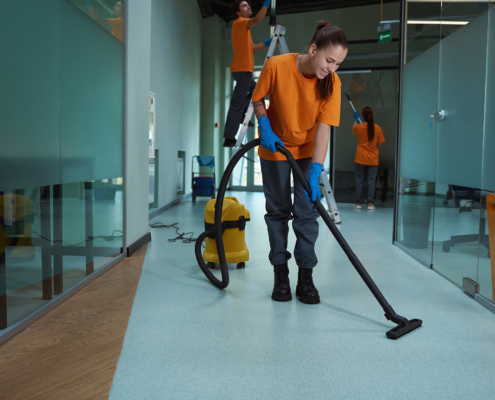 https://www.carlsonbuilding.com/wp-content/uploads/2025/10/Workers-cleaning-office-space.jpg
1250
2000
Abstrakt Marketing
https://www.carlsonbuilding.com/wp-content/uploads/2026/09/carlson-sizemore-logo-final-CROP-1030x376.png
Abstrakt Marketing2025-10-30 10:36:512026-05-07 08:59:51Determining the Best Commercial Cleaning Schedule: Day Porter vs. Night Cleaning
https://www.carlsonbuilding.com/wp-content/uploads/2025/10/Workers-cleaning-office-space.jpg
1250
2000
Abstrakt Marketing
https://www.carlsonbuilding.com/wp-content/uploads/2026/09/carlson-sizemore-logo-final-CROP-1030x376.png
Abstrakt Marketing2025-10-30 10:36:512026-05-07 08:59:51Determining the Best Commercial Cleaning Schedule: Day Porter vs. Night Cleaning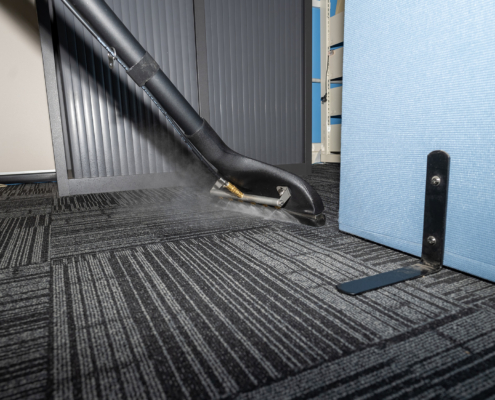 https://www.carlsonbuilding.com/wp-content/uploads/2025/07/Steam-carpet-cleaning.-Professional-Carpet-war-water-extraction.jpg
1250
2000
Abstrakt Marketing
https://www.carlsonbuilding.com/wp-content/uploads/2026/09/carlson-sizemore-logo-final-CROP-1030x376.png
Abstrakt Marketing2025-07-10 11:23:352026-05-07 08:59:51Why Spring Is the Best Time for Commercial Carpet Extraction Cleaning
https://www.carlsonbuilding.com/wp-content/uploads/2025/07/Steam-carpet-cleaning.-Professional-Carpet-war-water-extraction.jpg
1250
2000
Abstrakt Marketing
https://www.carlsonbuilding.com/wp-content/uploads/2026/09/carlson-sizemore-logo-final-CROP-1030x376.png
Abstrakt Marketing2025-07-10 11:23:352026-05-07 08:59:51Why Spring Is the Best Time for Commercial Carpet Extraction Cleaning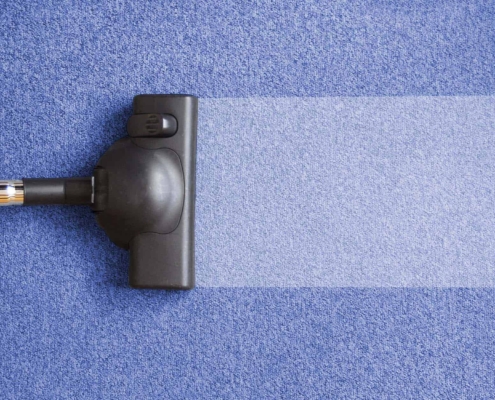 https://www.carlsonbuilding.com/wp-content/uploads/2024/12/The-Health-Risks-of-a-Dirty-Carpet_.jpg
1250
2000
Paul Cook
https://www.carlsonbuilding.com/wp-content/uploads/2026/09/carlson-sizemore-logo-final-CROP-1030x376.png
Paul Cook2022-10-31 09:00:282026-05-07 08:59:54Health Risks Associated With Dirty Carpets
https://www.carlsonbuilding.com/wp-content/uploads/2024/12/The-Health-Risks-of-a-Dirty-Carpet_.jpg
1250
2000
Paul Cook
https://www.carlsonbuilding.com/wp-content/uploads/2026/09/carlson-sizemore-logo-final-CROP-1030x376.png
Paul Cook2022-10-31 09:00:282026-05-07 08:59:54Health Risks Associated With Dirty Carpets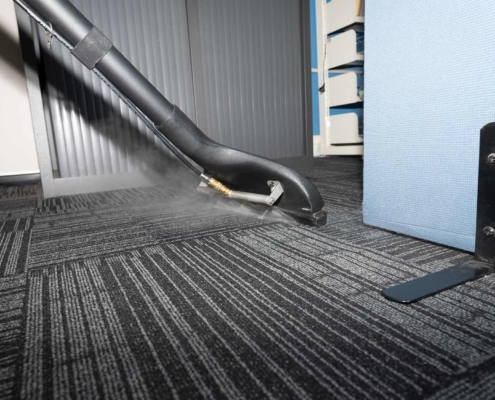 https://www.carlsonbuilding.com/wp-content/uploads/2024/12/February-Blog-1-Image.jpg
1250
2000
Paul Cook
https://www.carlsonbuilding.com/wp-content/uploads/2026/09/carlson-sizemore-logo-final-CROP-1030x376.png
Paul Cook2022-03-10 09:00:222026-05-07 08:59:55Commercial Carpet Maintenance
https://www.carlsonbuilding.com/wp-content/uploads/2024/12/February-Blog-1-Image.jpg
1250
2000
Paul Cook
https://www.carlsonbuilding.com/wp-content/uploads/2026/09/carlson-sizemore-logo-final-CROP-1030x376.png
Paul Cook2022-03-10 09:00:222026-05-07 08:59:55Commercial Carpet Maintenance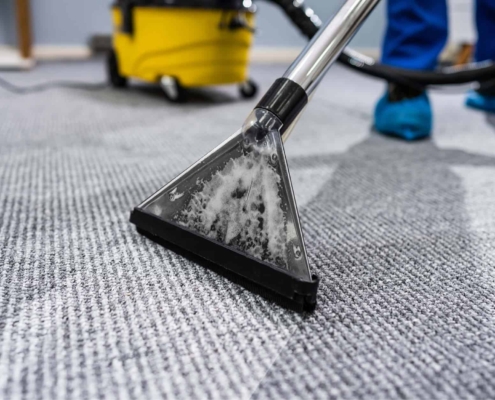 https://www.carlsonbuilding.com/wp-content/uploads/2026/09/carlson-sizemore-logo-final-CROP-1030x376.png
0
0
Paul Cook
https://www.carlsonbuilding.com/wp-content/uploads/2026/09/carlson-sizemore-logo-final-CROP-1030x376.png
Paul Cook2021-10-28 07:00:562026-05-07 08:59:55Best Methods to Professionally Clean Carpets
https://www.carlsonbuilding.com/wp-content/uploads/2024/12/CBM-August-Blog-1.jpg
1250
2000
Paul Cook
https://www.carlsonbuilding.com/wp-content/uploads/2026/09/carlson-sizemore-logo-final-CROP-1030x376.png
Paul Cook2021-09-13 10:00:512026-05-07 08:59:56Learn How To Dry Out Wet Carpet
https://www.carlsonbuilding.com/wp-content/uploads/2026/09/carlson-sizemore-logo-final-CROP-1030x376.png
0
0
Paul Cook
https://www.carlsonbuilding.com/wp-content/uploads/2026/09/carlson-sizemore-logo-final-CROP-1030x376.png
Paul Cook2021-10-28 07:00:562026-05-07 08:59:55Best Methods to Professionally Clean Carpets
https://www.carlsonbuilding.com/wp-content/uploads/2024/12/CBM-August-Blog-1.jpg
1250
2000
Paul Cook
https://www.carlsonbuilding.com/wp-content/uploads/2026/09/carlson-sizemore-logo-final-CROP-1030x376.png
Paul Cook2021-09-13 10:00:512026-05-07 08:59:56Learn How To Dry Out Wet Carpet